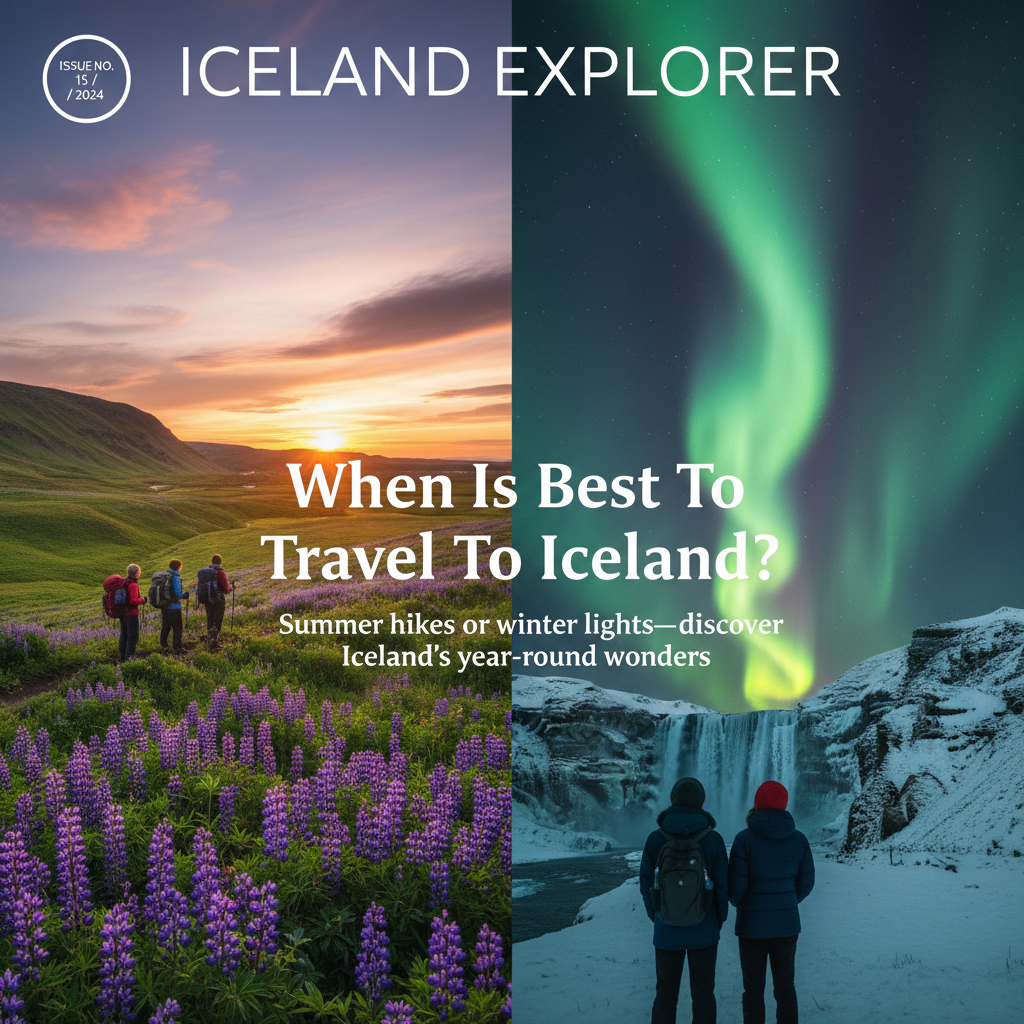
Iceland Travel Seasons at a Glance: A Quick Overview
Seasonal Highlights Table – Summer vs Winter vs Spring vs Fall
| Season | Weather (°C) | Daylight Hours | Key Attractions | Typical Costs |
|---|---|---|---|---|
| Summer (Jun–Aug) | 8–15 | 18–24 hrs | Midnight Sun, Hiking, Festivals, Puffins | High |
| Winter (Nov–Mar) | –5–3 | 4–8 hrs | Northern Lights, Ice Caves, Snow Activities | Moderate |
| Spring (Apr–May) | 0–8 | 13–20 hrs | Cascading Waterfalls, Fewer Tourists | Lower |
| Fall (Sep–Oct) | 1–10 | 11–13 hrs | Autumn Colors, Aurora Potential | Lower |
Summer vs Winter in Iceland: Which Is Right for You?
Weather, Daylight & Natural Phenomena (Midnight Sun vs. Northern Lights)
Summer in Iceland offers average temperatures between 8–15°C and up to 24 hours of daylight, making it the ideal time for outdoor adventures and witnessing the Midnight Sun (late June). In contrast, winter months average –5–3°C with only 4–8 daylight hours, but offer the best conditions (September–March) to see the Northern Lights.
Activities Showdown: Hiking, Festivals & Wildlife vs. Ice Caves, Aurora & Adventure
- Summer: Premier hiking, whale watching, puffin colonies, vibrant festivals (e.g., Reykjavik Arts Festival), and road trips along the Ring Road.
- Winter: Guided Northern Lights tours, blue ice caves (Dec–Mar), glacier hikes, and snowmobiling. Fewer wildlife sightings but unique landscapes.
Cost Comparison: Accommodation, Flights & Tours
- Summer: High demand leads to top-tier prices for hotels, car rentals, and flights. Average daily spend: $250–$350 per person.
- Winter: Accommodation and car rentals are 15–30% cheaper. Tours (especially Aurora) are a good value. Average daily spend: $180–$250 per person.
Crowd Levels & Local Vibe
- Summer: Most attractions are busy, reservations required. Lively ambiance in Reykjavik and main towns.
- Winter: Quieter, more local experience, fewer crowds at major sites. Some rural roads less accessible.
Shoulder Seasons (Spring vs Fall): The Case for Visiting Off-Peak
Pros & Cons of Spring Travel to Iceland
- Pros: Melting snow creates powerful waterfalls. Migratory birds return. Low prices and fewer tourists.
- Cons: Unpredictable weather, some highland roads remain closed until late May.
Pros & Cons of Fall Travel to Iceland
- Pros: Dramatic fall foliage, possible early Northern Lights (from September), small crowds, reduced rates.
- Cons: Shorter days, variable weather, less wildlife.
Unique Experiences & Lesser-Known Events
- Spring: First lambing in farms, Easter celebrations
- Fall: Reykjavík International Film Festival, sheep round-ups
Purpose-Driven Iceland Travel: Which Season Wins?
Adventure Enthusiasts vs. Relaxation Seekers
- Adventure: Summer for trekking and road trips, winter for glacier and ice adventures
- Relaxation: Winter’s geothermal baths (like Blue Lagoon, Sky Lagoon) amidst snow, less crowded in spring and fall
Solo Travelers vs. Families, Couples, and Groups
- Solo: Winter or shoulder for lower costs and unique activities
- Families: Summer for 24-hour daylight and open attractions
- Couples: Fall for romantic scenery and aurora, winter for cozy getaways
Sustainability & Accessibility: Choosing the Best Time for Responsible Travel
Eco-Friendly Travel Best Practices by Season
- Shoulder months (April–May, September–October) help reduce tourist strain
- Opt for carbon-neutral tours and reuse transport when possible year-round
Accessibility Considerations for Different Times of Year
- Summer: Best road conditions, high accessibility across Iceland
- Winter: Some roads closed, guided tours recommended
Iceland Month-by-Month: A Detailed VS Breakdown
Best Months for Northern Lights, Wildlife, and Festivals
- Northern Lights: September–March (peak darkness and clear skies)
- Wildlife: May–August for puffins; June–July for whales
- Festivals: June–August (music, art, and culture events)
Month-to-Month Weather & What to Expect
- January: Harsh winter, aurora, snow sports
- April: Melting snow, increasing daylight, good deals
- June: Longest days, full bloom, high prices
- September: Aurora starts, fall colors, mild
- October: Cooler, quieter, atmospheric
FAQ – When Is Best to Travel to Iceland for Special Interests?
Photographers
- Fall or Winter: Aurora, unique light, dramatic landscapes
- Summer: Midnight Sun for endless golden hour
Backpackers & Budget Travelers
- Spring and Fall: Lower prices, less crowded, hostels available
Honeymooners & Special Occasions
- Winter: Romantic, snowy settings, chance for private Aurora tours
- Summer: Outdoor adventure, picturesque spots
Iceland Trip Planning Tips: Making the Most of Your Chosen Season
- Book accommodation and tours early for summer; consider cancellations for winter weather
- Pack layers and waterproof clothing for all seasons
- Explore guided tour options for winter and less accessible regions
- For cheap flights and deals, use skyscanner.com or kayak.com
- Recommended tours, car rentals, and activities:
Ready for your Iceland adventure? Book your flight now and discover the season that’s best for your journey!