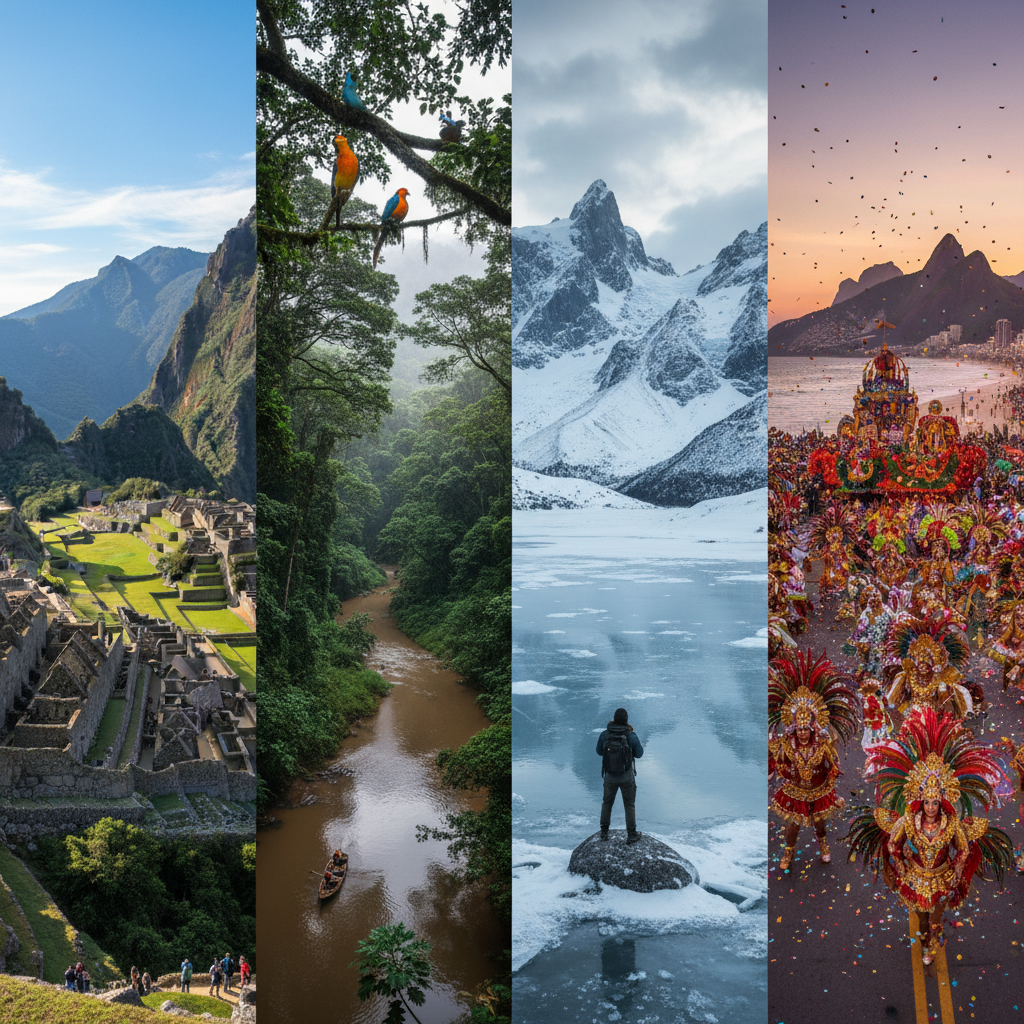
Quick Decision Guide – Best Times to Travel to South America by Interest
Adventure Seekers
- Patagonia: December-February for long trekking days (avg. temps 10–20°C, 12–16 daylight hours); book 6–12 months ahead.
- Andes: May-September for dry, stable conditions (10% chance of rain, 80% of annual treks occur June-August).
- Atacama: May-October dry, arid, and excellent for off-road routes or desert stargazing.
Relaxation & Wellness Travelers
- Northern Tropics & Brazil’s coastal resorts: December-April for beach weather, minimal rain, and optimal well-being retreats.
- Colombia (Cartagena/Tayrona): Dec-Apr is dry and best for Caribbean coast relaxation.
Wildlife & Eco-Tourism
- Amazon: June-October for high visibility, lowered water levels; more accessible for wildlife and less mosquitos.
- Galápagos: Dec-May for best snorkeling (74-82°F water, 40–100 ft visibility); June-Nov for peak marine activity.
- Whale Watching: June-October (Ecuador/Peru/Brazil: >90% sighting rates for humpbacks).
Cultural & Festival Enthusiasts
- Brazil: February-March for Carnival (book early – 2 million+ visitors in Rio).
- Peru/Bolivia: February for Virgen de la Candelaria; June for Inti Raymi (Cusco’s Sun Festival).
- Harvest Festivals: October-November in wine regions (Argentina/Chile).
Digital Nomads & Remote Workers
- Shoulder Seasons: April-June, September-November for fast, reliable internet in main cities, moderate prices, lower crowds, and better accommodation options (40% fewer tourists).
Understanding South America’s Seasons & Climate in 2026
Overview of Seasons by Region (Andes, Amazon, Patagonia, Atlantic Coast)
- Patagonia: Summer (December-February) is warmest (10–20°C), mild winds; Winter brings snow and cold (skip for trekking).
- Andes (Peru/Bolivia/Ecuador): Dry season May-October; Cold nights (0–10°C), Clear for hiking and cultural sites.
- Amazon: Wet November-May (flooding, wildlife viewing from boats); Dry June-October (more walkable, best jungle excursions).
- Atlantic Coast/Brazil/Northern Tropics: Wet in southern summer (December-March), Dry and vibrant December-April in the north.
Climate Anomalies in 2026 (El Niño, La Niña Impacts)
2026 is forecasted to have neutral ENSO conditions, based on current NOAA/IRI models. However, La Niña could still develop, making the Andes drier and increasing Amazon floods. Always double-check updated climate forecasts before booking.
Visual Table: Weather Patterns by Month & Major Destination
| Month | Patagonia | Andes | Amazon | Brazil (Rio) | N. Tropics (Cartagena) |
|---|---|---|---|---|---|
| Jan | Warm, peak summer | Rainy | Wet/Flooded | Festive, very warm | Dry |
| Feb | Warm, trekking | Wet | Very wet | Carnival, peak crowds | Dry, best beaches |
| Mar | Mild, early fall | Dry begins south | Wet | Post-Carnival | Dry |
| Apr | Cooling | Transition | Wet | Quieter | Dry |
| May | Cool, fewer tourists | Dry, best treks | Dry begins | Off-peak | Wet begins |
| Jun-Aug | Winter, cold | Dry, treks peak | Best for wildlife | Mild, less rain | Some rain |
| Sep-Oct | Spring, blooming | Dry wanes | Dry ends | Spring, shoulder | Rain decreases |
| Nov | Spring, warming | Rain increases | Rains begin | Warming, festive | Dry season returns |
| Dec | Start of summer, peak | Rainy | Very wet | Xmas, hot | Dry, festive |
Regional Breakdown – Best Time to Visit Top South American Destinations
Patagonia & The Southern Cone
Best: December-February (avg. 10–20°C). Book early—hotels/trek permits sell out 6–12 months in advance. Shoulder: Oct-Nov, Mar-Apr for fewer crowds, stable but cooler weather. Winter (May–Sep): Main treks close, some snow sports open.
Andes – Peru, Bolivia, Ecuador (Machu Picchu, Lake Titicaca, etc.)
Best: May-September; nearly all rain is gone, paths are stable. High Season: June-August (book permits early; Machu Picchu has 2,500 daily limit), shoulder seasons cheaper.
Brazil & The Amazon
Amazon Rainforest: June-October is best for wildlife, canopy walks, and manageable humidity. Brazilian Coast: Feb-Mar for Rio Carnival; May-September is drier and cheaper.
Colombia, Venezuela & the Northern Tropics
Best: December-April for Caribbean beaches, Tayrona hiking, and lush Guajira desert adventures. Shoulder: September-November is budget-friendly, fewer crowds, but some rain.
Chile & The Atacama
Atacama Desert: May-October for stargazing, driest climate, vivid salt flats. Weather is stable; November-February can be busier.
Eco-Conscious Travel – When to Visit South America with the Lowest Environmental Impact
Sustainable Travel Tips by Season
- Travel in shoulder periods (September-November, March-May) for lower crowd impact and mild weather, especially in Patagonia/Andes.
- Choose eco-certified lodges, longer stays (20–30 days/country), and overland routes when possible.
Monitoring Overtourism & Environmentally Sensitive Dates
- Avoid February (Carnival/peak Andes rain, Inca Trail closures) and December-February (Patagonia, Galápagos, beaches) for overtourism.
- Support offseason festivals and housing in remote villages like Cachi, Cafayate (Argentina) and local Amazon lodges.
Supporting Local Communities Throughout the Year
- Book with local guides; buy from small markets, wineries, and indigenous-run accommodations. Learn more
Festivals, Events, & Hidden Cultural Gems by Month
Major Events (e.g., Carnival, Dia de los Muertos, Semana Santa)
- February: Rio Carnival (Brazil, 2M+ visitors), Festival de La Virgen de la Candelaria (Peru/Bolivia), Barranquilla Carnival (Colombia).
- June: Inti Raymi (Cusco, Peru, Sun Festival tradition).
Lesser-Known Indigenous Festivals and Regional Celebrations
- March-November: Scattered regional Andean and wine harvest festivals. Details vary annually—check local sources for 2026 schedule.
Local Food Seasons & Harvest Festivals
- October-November: Grape/wine harvest (Mendoza, Colchagua Valley)
- Potato and quinoa harvests in Andean villages; always check local calendars.
The Best Time for Wildlife, Nature Adventures & Specific Activities
Galápagos Islands – Wildlife Highlights & Snorkeling
- Snorkeling Best: December-May (74–82°F, 40–100 ft visibility; gentler seas); June-November for more sea lions, sharks, and cooler water (66–72°F).
- Lowest tourist traffic: February (cruise discounts, fewer crowds).
Amazon Rainforest – Birdwatching & River Cruises
- July-October: Lowest rainfall = highest bird sightings (up to 500+ species/month possible); lower mosquitos and more manageable trails.
Andes & Patagonia – Trekking, Mountaineering, Stargazing
- Andes: May-September (Cordillera Blanca, Inca Trail).
- Patagonia: December-March (long, mild days; wildlife sightings peak Jan-Feb).
Beaches, Surfing & Whale Watching
- Peru/Brazil: Surf December-April for warmest water and best waves.
- Whale Watching: June-October (humpbacks in Ecuador/Peru/Brazil, 90%+ sighting rates).
Money Matters: How Timing Affects Prices, Crowds & Accessibility
High Season vs Shoulder Season: Pros & Cons
- High season (Dec–Feb Patagonia, Jun–Aug Andes): 20–50% higher costs, 50–80% fewer rooms, must book Machu Picchu, Torres del Paine, Galápagos cruises 6–12 months in advance. More crowds, but weather ideal.
- Shoulder seasons (Apr–Jun, Sep–Nov): Save 20–50% on tours/hotels, half the crowds, mild weather, best for budget travelers.
Booking Tips for Popular Spots (Machu Picchu, Iguazú Falls)
- Machu Picchu: Daily cap is 2,500 visitors. Buy tickets/trains 6–12 months before June-Aug.
- Iguazú Falls: 6–9 months ahead for best river-facing hotels (May–September lowest rates).
- Grab deals from $407 – Expedia
Traveling South America on a Budget: Month-by-Month Savings Tips
- Budget: $25–50/day in Bolivia/Peru; $30–80/day mid-range elsewhere. Shoulder months save up to 50% on transport/lodging.
- Best value: April–June, September–November. Campsites €15/night, hostels $6–18. Domestic flights cost 25–50% less outside holidays.
- Use Argentina’s Blue Dollar, book multi-stop flights, combine buses/trains for longer, cheaper trips.
Resources & Practical Tips for 2026 Travelers
Weather Tools and Up-to-Date Forecast Sites
- AccuWeather app, SENAMHI Peru, INMET Brazil, local weather apps for real-time regional forecasts.
Visa, Health & Safety Considerations by Season
- Check entry requirements on official embassy sites (e.g., Peru.gov.pe, Chile.travel).
- Yellow fever vaccine proof required for Amazon. Always have travel insurance and check government advisories (US/UK/AUS as baseline).
- Stick to main routes, avoid overland border crossings in high-risk areas (e.g., Colombia/Venezuela borders).
Essential Packing Checklist for Each Climate
| Category | Essentials |
|---|---|
| Clothing (Layers) | Merino base, fleece mid, waterproof shell, quick-dry shirts/pants, swimwear, warm hat/gloves (mountains), sturdy boots/sandals. |
| Weather Protection | Packable rain poncho, UV hat/sunglasses, SPF 50+ sunscreen. |
| Health | Vaccine card (yellow fever), DEET repellent, altitude pills, rehydration salts, first-aid kit, filter bottle. |
| Practical | Power bank, travel adapter (types A/C/I/N), offline maps, insurance papers, passport copies, daypack. |
| Other | Cash (small USD), money belt, earplugs, snacks, packable tote/bags. |
FAQ – Best Time to Travel to South America (2026 Edition)
Most Asked Questions by Travelers
- Best 1–2 month itinerary? Colombia–Ecuador–Peru–Bolivia–Chile loop (spend 10–20 days/country depending on pace).
- How much does it cost? $25–$65/day for budget/mid-range, more in Patagonia or Galápagos during peaks.
- How far ahead to book? 6–12 months for hotspots (Machu Picchu, Patagonia), 2–4 months elsewhere.
Common Misconceptions About the Weather
- Not all of South America is tropical or hot—expect alpine cold in Peru/Bolivia/Chile, heavy rain in Amazon, storms in Patagonia, microclimates everywhere. Always research by micro-region—not country or continent-wide.
Alternatives If Travel Plans Change
- Use flexible/refundable tickets. Stay longer in main hubs (Cusco, Lima, Buenos Aires) and look for impromptu local tours. Reroute by bus or air via Lima, Santiago for better safety and connectivity.
For real-time deals, climate updates, and expert-tested tours for 2026, browse G Adventures or Intrepid South America tours.