Norway Travel Trends 2026 – What’s New and Essential for Travelers
Eco-Conscious Exploration: Norway’s Shift Towards Sustainable Tourism
In 2026, Norway reinforces its sustainable tourism drive with a new 3% tourist tax dedicated to environmental protection and infrastructure in high-impact destinations like the Lofoten Islands, fjords, and Tromsø. Overtourism management is central, as Norway saw a record 40.6 million guest nights in commercial accommodations in 2025—a 5.2% rise from 2024. Lofoten’s “Green Islands 2030” initiative aims for a 60% emission reduction by 2030, and most tourism businesses now employ climate accounting and zero-emission transport. Measures include cruise visitor restrictions and tax-funded trail maintenance in popular hiking regions. Learn more & book responsibly.
Remote Work, Digital Nomads, and Norway’s Hospitality Evolution
While Norway lacks specific 2026 data on digital nomads, trends such as “holiday hopping”—multi-stop itineraries and 2-3 day adventure packs—cater to short-stay professionals and remote workers. Infrastructure improvements, flexible accommodation, and 24-hour summer daylight foster work/play balance, especially in urban centers and northern nature retreats.
Climate, Timing & Unique Events: When to Visit Norway in 2026
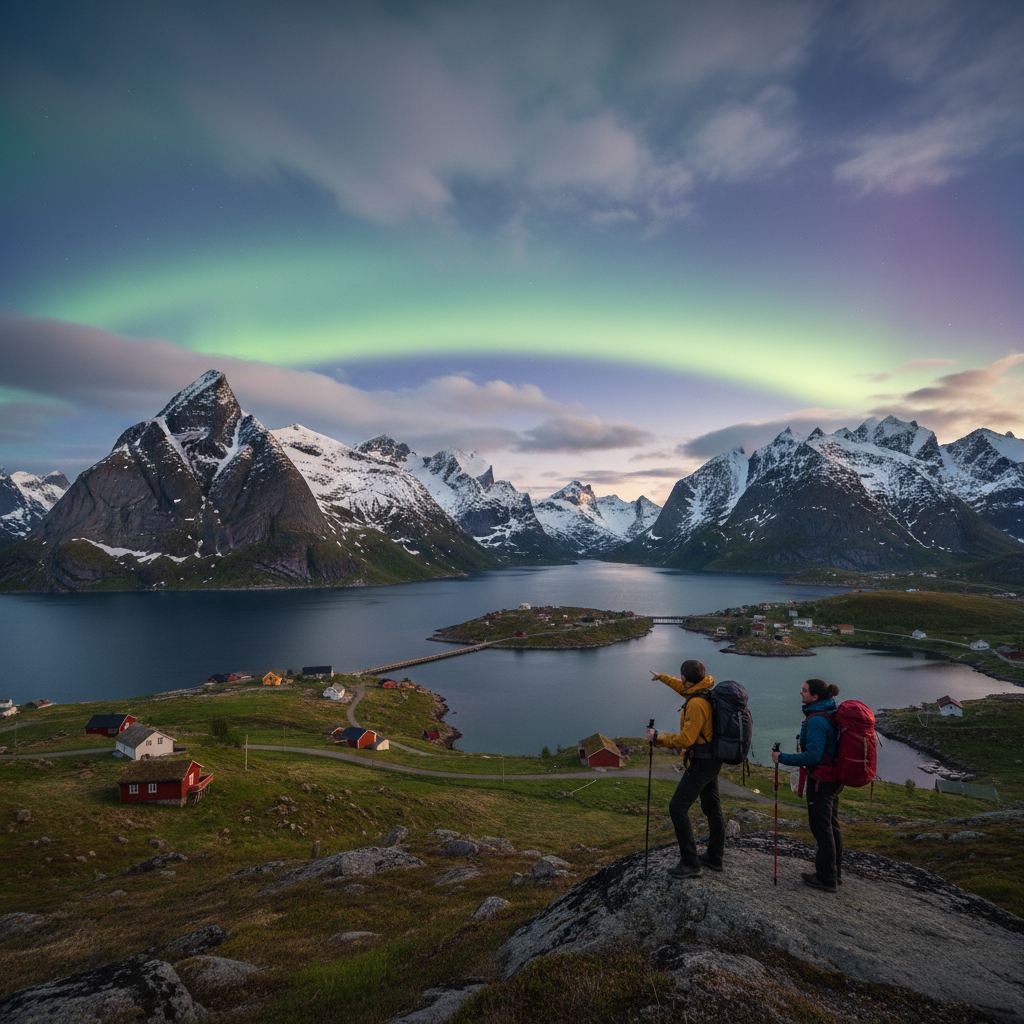
Summer (June–August) stands out for “coolcation” appeal, recording 7.4 million guest nights in July 2025, when urban heat drives travelers to cooler Nordic destinations. Winter remains essential for northern lights tourism, further enhanced by the 2026 solar maximum, offering exceptional aurora displays in Lofoten, Svalbard, and Tromsø. Shoulder seasons (spring/autumn) see increasing growth in Norways’s Arctic regions, expanding beyond a winter destination.
Classic Best Places to Visit in Norway
Oslo – The Urban Gateway to Norwegian Nature and Culture
Oslo leads Norwegian tourism with 6.93 million overnight stays in 2025 (30% of national stays). As the capital, Oslo offers a blend of urban vibrancy and natural highlights—fjord cruises, parks, world-class Viking museums, and the iconic Opera House. The city ranks highest for accessibility and serves as the main hub for international arrivals and cultural immersion.
Bergen – City of Fjords and Coastal Wonders
Bergen, Norway’s second city, attracted 3.31 million overnight stays in 2025. Bergen’s UNESCO-listed Bryggen wharf, gateways to the western fjords, and lush mountains (courtesy of its rainy microclimate) are key draws. As a major cruise port (600,000+ cruise passengers in 2024), Bergen uniquely combines vibrant urban life with immediate access to fjord adventures.
Geirangerfjord & Sognefjord – Norway’s Majestic Waterways
Geirangerfjord and Sognefjord define Norway’s natural grandeur. Geirangerfjord, a UNESCO site, is known for its dramatic cliffs and waterfalls and remains a staple of luxury fjord cruises—part of a cruise traffic boom with nearly 3,900 arrivals nationwide in 2025 (up to 60,000 cruise passengers per day). Sognefjord, the longest (204 km) and deepest (1,308m) fjord worldwide, is ideal for multi-day rail and cruise “Norway in a Nutshell” journeys.
Tromsø – Top Arctic Adventures and Northern Lights
Tromsø is Northern Norway’s adventure hub, helping drive the region’s record 2.37 million overnight stays during summer 2025. Famed for midnight sun (summer), northern lights (winter/solar max in 2026), whale watching, and the Arctic Cathedral, Tromsø stands apart for aurora viewing, extreme Arctic nature, and a strong sustainability focus.
| Destination | 2025 Overnight Stays (millions) | Key Differentiator | Cruise Focus |
|---|---|---|---|
| Oslo | 6.93 | Urban hub, culture | Low |
| Bergen | 3.31 | Fjord gateway, UNESCO | High |
| Geirangerfjord | Cruise-heavy (regional) | Dramatic fjord scenery | Very High |
| Sognefjord | Regional (cruise data) | World’s longest fjord | High |
| Tromsø | 2.37 (N. Norway summer) | Northern lights/Arctic | Moderate |
Hidden Gems and Off-the-Beaten-Path Places in Norway (2026 Edition)
Senja Island – Norway’s Wild North Beyond Lofoten
With fewer than 50,000 visitors per year, Senja epitomizes wilderness with jagged mountains, wild beaches, and the Segla hike. Unlike busy Lofoten, Segla offers panoramic views and peaceful fjords for hiking and kayaking—ideal for summer “coolcation” seekers and photographers.
Helgeland Coast – Untouched Archipelagos and Secret Beaches
Attracting only ~20,000–50,000 annual visitors, Helgeland’s 12,000+ islands and UNESCO-listed Vega archipelago remain undiscovered. Experience sustainable eider duck farming, hiking at Torghatten’s natural tunnel, and birdwatching and kayaking in isolation.
Røros – UNESCO Heritage and Sustainable Mining Town
Røros, with about 100,000 visitors yearly (mainly domestic), offers well-preserved wooden architecture and a walkable town center. The legacy of copper works, Artisan crafts, and Sami-influenced markets make it a sustainable culture-focused alternative to city tourism.
Værøy & Røst – Remote Lofoten Islands with Fewer Tourists
These outer Lofoten isles receive less than 10,000 visitors combined, due to ferry-only access. Hike rugged cliffs on Værøy, spot sea eagles, or witness 100+ bird species and storm-battered North Atlantic isolation on Røst—both ideal for wildlife enthusiasts and solitude seekers.
Finnmark & Sapmi – Genuine Sami Culture and Arctic Wilderness
Finnmark and Sapmi, with ~50,000–100,000 visitors annually, protect the core of the indigenous Sami Nation. Experience reindeer herding, stay in a traditional lavvu, learn Sami handicrafts, and see UNESCO-listed Alta rock carvings (dating back 9,000 years), for a cultural deep dive beyond tourist-centric aurora chasing.
- Community Significance: These regions defend Norway’s traditions—fishing cabin (“rorbu”) culture, artisanal crafts, and Sami nomadism—while supporting sustainable tourism and community resilience against overtourism.
Sustainable Travel Destinations and Experiences in Norway
Electric Fjord Cruises and Green Railways
Eco-friendly measures dominate, with cruise ships limited in fjords/ports and a 2026 tourist tax directly funding lower-impact vessels and emission reduction. Bergen, for example, caps cruise ships at four per day. The Lofoten Green Islands initiative encourages climate accounting and zero-emission local transport, though specific green railway projects or operators are not listed; expect rolling investments in eco-upgrades to rail and hike infrastructure.
Eco-Lodges and Responsible Local Stays
Many Lofoten accommodations now practice climate accounting for emissions and promote zero-waste stays. While exact eco-lodge names or certifications were not recorded, the regional focus is certified and underpins Norway’s international image for sustainable tourism excellence.
Low-Impact Hiking Trails and National Parks
38.6 million total overnight stays in 2024 have increased stress on popular routes, so tourist tax revenues are directed at trail maintenance and habitat conservation (notably in fjords and Lofoten). The Norwegian Trekking Association plays a key role in reducing mountain habitat damage and promoting sustainable enjoyment.
Authentic Norwegian Culture: Towns, Food, and Festivals
Ålesund’s Art Nouveau and Seaside Gastronomy
Ålesund showcases Norwegian Art Nouveau architecture, rebuilt entirely after a 1904 fire. The city’s scenic walks (Aksla viewpoints, Høgkubben hikes) easily combine with adventure outings (RIB fjord safaris, sea eagle spotting, kayaking) and a unique seafood scene. Book top-rated local tours via GetYourGuide – Ålesund.
Local food highlights include klippfisk (dried salted cod), bacalao, and fresh daily catches. Visit open-air markets and waterfront restaurants for the best experience.
Norwegian Stave Churches and Folklore Villages
Stave churches (e.g., Urnes, Borgund) represent medieval Norwegian wooden craftsmanship and are UNESCO-protected. Travelers enjoy immersive historical tours with Viking motifs and folklore ties, while open-air museums like the Sunnmøre Museum in Ålesund bring folklore villages to life with reconstructed timber buildings, folk music, and Sami influences.
2026’s Must-Visit Festivals and Local Experiences
Festival dates are mainly unconfirmed for 2026; summer usually features midsummer (St. Hans), Art Nouveau city events, and folk music festivals across major towns and open-air museums. Consult local tourism websites for up-to-date event schedules as summer approaches.
Adventure Seekers: Norway’s Top Spots for Outdoor Thrills
Kayaking and Wild Camping in Lysefjord
Lysefjord offers world-class sea kayaking, best from mid-May to mid-September. Most guided multi-day expeditions (4–6 days, 42 km) require certification and cost from 1,000 NOK (self-guided, per day) to 14,400 NOK (guided, 6 days). Safety is critical—expect unpredictable winds/waves, limited landing sites, and essential camping skills. Top operators include Norwegian Sea Kayaking – Lysefjord and Nature Travels.
Hiking Iconic Peaks: Trolltunga, Preikestolen & Beyond
Preikestolen (Pulpit Rock) is accessible both via kayak tour and hiking trail, with the classic hike best from June-September. Trolltunga and Kjerag offer advanced hiking for fit trekkers seeking panoramic fjord views. Safety advice: always check weather, wear appropriate gear, and consider guided options given changing mountain conditions.
Skiing, Snowboarding, and Unusual Arctic Sports
While Arctic winter data is limited, Norway remains a world leader in skiing and snowboarding, with top resorts in the north and special experiences like ice fishing, dog sledding, and reindeer safaris especially near Tromsø and Alta. Peak winter season is December to March, with extended Arctic daylight for unique activities in summer.
Planning Your Norway Trip in 2026: Essential Tips
Smart Transport Links: Trains, Ferries, and Flights for 2026
International access is best via Oslo (OSL) and Bergen (BGO) airports. Scenic rail links include the Oslo-Bergen line and the Flåmsbana to Flåm village. Ferries such as Hurtigruten’s coastal express or Havila Voyages connect Bergen, Trondheim, Lofoten, and Kirkenes. Rental cars and buses supplement travel between fjords and mountain towns. Use Vy.no for trains, Hurtigruten or Havila for coastal trips, and Norway in a Nutshell for combined packages.
Booking Accommodations: Sustainable and Unique Options
For summer or winter peak travel, book hotels or specialty “rorbuer” cabins 6–12 months in advance, particularly in Lofoten or Tromsø. Recommended providers for curated packages: Nordic Visitor and 50 Degrees North. For insider tips, see VisitNorway.com.
Safety, Budget, and What to Know Post-Pandemic
- Norway boasts low crime rates; main risks are outdoor-related: hiking accidents, avalanche risks (follow all safety rules).
- Budget €200–400/day/person (excluding international airfare). Save with package tours and by visiting in shoulder seasons.
- No acute pandemic restrictions for 2026, but always check official sources close to departure for Schengen entry or health advisories.
- Pack for changing weather (layers, waterproofs, hiking gear). Contactless payment is universal; ATMs are widely available.
FAQ: Best Places to Travel in Norway and How to Choose
- Top Classic Regions: Bergen (UNESCO Bryggen, mountain hikes), Ålesund (Art Nouveau, fjord scenery), Oslo (museums, food, parks), Trondheim (Gothic cathedral), and Stavanger (Viking history).
- Fjords: Geirangerfjord and Nærøyfjord are UNESCO World Heritage sites and Norway’s top attractions for cruises and kayaking.
- Lofoten Islands: Ideal for Arctic scenery, rorbu cabins, and fishing villages. Time-intensive but exceptionally scenic.
- Hidden Gems: Hjӧrundfjord, Marmorslottet, and Rjukan offer fewer crowds, authentic culture, and unique landscapes.
| Travel Style | Best Destinations | Reason |
|---|---|---|
| City Culture | Bergen, Oslo, Trondheim, Ålesund | UNESCO, museums, food |
| Outdoor/Hiking | Lofoten, Lysefjord, Tromsø, Stavanger | Iconic trails, nature |
| Scenic Drives | Trollstigen, Sognefjell, Gamle Strynefjellsvegen | Dramatic roads |
| Photography | Bryggen, Lofoten, Geirangerfjord | Stunning scenery |
- Plan at least 10 days for multi-region exploration. Three days per region for in-depth experiences.
- Visit VisitNorway.com for bookings, seasonal tips, and themed itineraries.
- For unique, less-visited places, consider Hjӧrundfjord, Marmorslottet (the Marble Castle), or historic Rjukan (WWII and mountain adventures).
Ready to experience Norway’s best and most sustainable travel in 2026? Start planning and book your adventure now at VisitNorway.com.