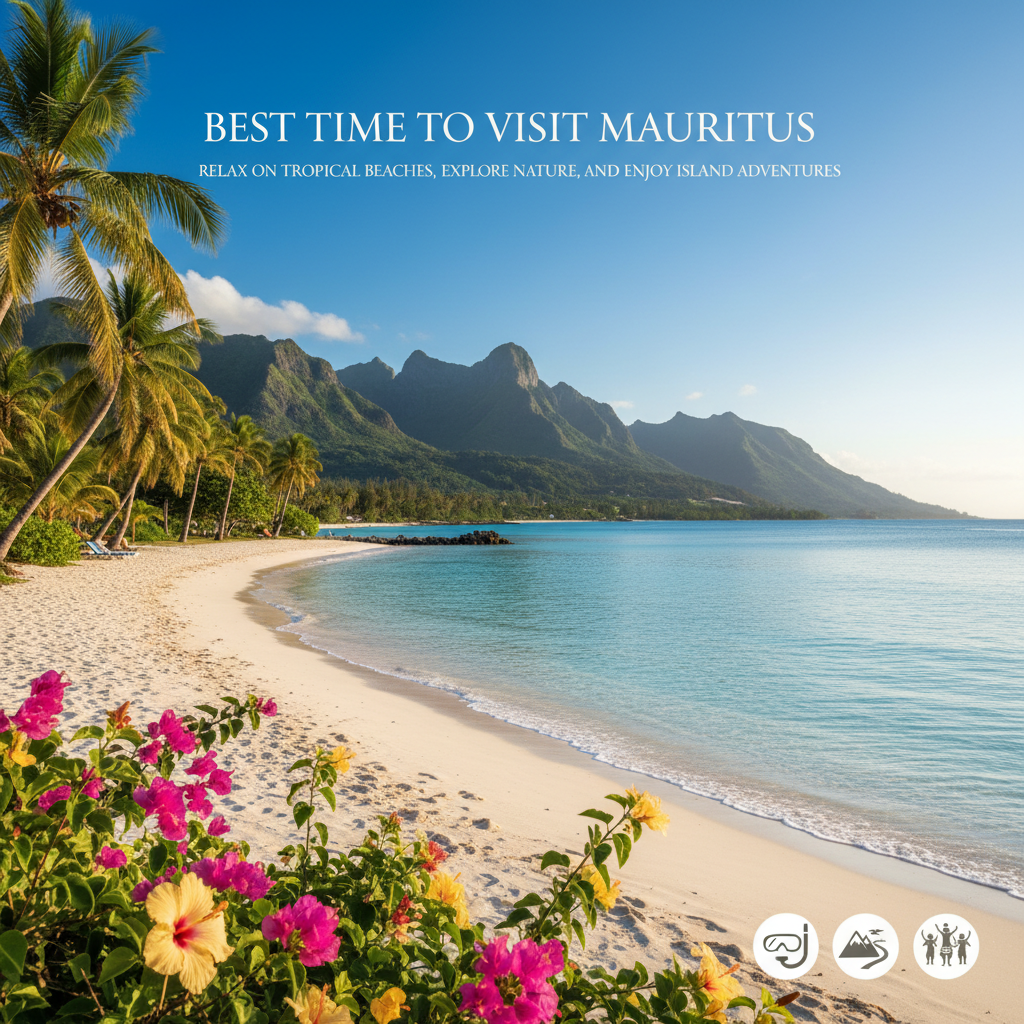
Quick Summary – Best Time to Visit Mauritius in 2026
Best Overall Month to Travel to Mauritius
May and June stand out as the best overall months for visiting Mauritius in 2026. They offer warm temperatures (average highs: 27–28°C), low humidity, clear skies, and minimal rainfall. These months also avoid the high cyclone risk and offer excellent value with fewer crowds and lower prices.
Best Season for Weather and Activities
The cooler, drier winter season from May to October is ideal for outdoor activities such as hiking, eco-adventures, and exploring national parks. For classic beach holidays and watersports, November to April provides the warmest sea temperatures and long sunshine hours, though rainfall and humidity peak between January and March.
2026 Major Events to Consider
- Thaipoosam Cavadee: February 1 – Vibrant Hindu procession.
- Maha Shivaratree: February 15 – Largest pilgrimage to Ganga Talao lake.
- Philharmonia Festival: February 7–15 – International orchestra concerts.
- Ganesh Chaturthi: September 16 – Major Hindu celebration.
- Chinese Spring Festival: February 17 – Lanterns and festivities in Port Louis.
Mauritius Climate Overview – What to Expect Year-Round
Temperature, Rainfall & Cyclone Patterns
Mauritius enjoys a tropical maritime climate with two main seasons: warm wet summer (November–April) and cool dry winter (May–October).
| Month | Avg. High (°C) | Avg. Low (°C) | Rainfall (mm) | Notes |
|---|---|---|---|---|
| January | 29–31 | 24–25 | 194–228 | Warmest; humid; cyclone season begins |
| February | 29–31 | 24–25 | 184–253 | Wettest; cyclone peak |
| March | 29–31 | 24 | 143 | Transition to drier months |
| April | 29–31 | 23–24 | 80 | Humidity dropping |
| May | 27–28 | 21–22 | 53 | Comfortable shift to dry |
| June | 27 | 19–20 | 30 | Cooler, start of driest period |
| July | 26–27 | 17–19 | 31 | Coolest, very dry, windy south/east |
| August | 26–27 | 16–19 | 34 | Dry, comfortable |
| September | 27 | 17–19 | 35 | Dry, warming up |
| October | 28–30 | 19–21 | ~50–53 | Driest, start of peak warmth |
| November | 29–30 | 22–23 | 53 | Sunny, heating up |
| December | 30–31 | 23–24 | 111 | Humid, rain increases |
- Annual average rainfall: ~2,010 mm (varies from 1,000 mm in the north/west to 5,000 mm in the central plateau/south-east).
- Cyclone season is November–April, peaking January–March. Annual cyclone risk is low but brings heavy rains and winds when it occurs (once every 5 years on average).
- Sunshine: 6.5–8 hours daily year-round. Humidity is highest during summer months.
Regional Weather Differences
- North/West coasts (Grand Baie, Flic en Flac): Driest, sunniest, and best for calm sea conditions, especially in winter.
- East/South coasts (Belle Mare): Windier and wetter, especially from May to October due to southeast trade winds. Rougher seas during this period.
- Central Plateau (Curepipe): Cooler by 3–5°C and wettest; frequent clouds and occasional mists, great for those seeking cool air.
- Port Louis (capital): Sheltered, moderate rainfall, and consistently warm.
Toplist – Best Months to Visit Mauritius by Travel Style
Best for Beach Holidays
November to April excels with warm sea temperatures and long sunny days. December–March is peak for water clarity and beach ambience, though December–February sees more rain and crowds. For fewer tourists and balmy weather, choose May or June.
Best for Diving and Snorkeling
December to March has optimal underwater visibility and warmest seas (around 27–28°C). The western and eastern lagoons are vibrant with marine life. Consider booking with local operators such as Mauritius Diving for guided experiences.
Best for Hiking & Adventure Activities
May to October is best for hiking, mountain biking, and nature reserves. Black River Gorges National Park is especially pleasant with cool, dry air (20–24°C) and solid trail conditions.
Best for Festivals & Cultural Experiences (2026 Highlights)
- Holi Festival of Colours – February/March
- Maha Shivaratree – February 15
- Philharmonia Festival – February 7–15
- Ganesh Chaturthi – September 16
- Chinese Spring Festival – February 17
January–March and August–November host many of Mauritius’ signature multicultural festivals that showcase the island’s rich blend of traditions.
Best for Whale Watching & Unique Wildlife
June–October is the best whale-watching window (mainly sperm whales and humpbacks). This period also overlaps with Mauritius’ drier, uncrowded season—perfect for eco-travelers. Book in advance with certified operators.
Exclusive 2026 Angles – Tailored Timing for Modern Travelers
Best Time for Eco-Friendly & Sustainable Travel
May–October offers dry trails, lower humidity, and fewer crowds at parks and reserves, limiting environmental impact. It’s prime time for hiking, birdwatching, and community ecotourism tours such as those at Chamarel Seven Colored Earth or Black River Gorges.
Hidden Gem Events and Uncrowded Seasons
- May–September: Lowest crowd density, quieter beaches, and national parks with local events rather than mass tourist festivals.
- June: Breezy conditions, ideal for outdoor adventure, minimal visitors, and top budget value.
Family-Friendly Months: School Holidays & Child-Safe Seasons
April–May and October–November feature balmy weather, clear seas, and few storms. These shoulder periods combine safety, affordability, and abundant sunshine, making them ideal for families—with activities like dolphin watching, kids’ camps, and gentle sea swimming.
Best Months for Digital Nomads & Remote Workers
May–September gives digital nomads steady sunny weather (averaging 21–24°C), low humidity and mild winds. Fast internet and quiet co-working spaces are more accessible outside the busy November–April peak. Check platforms like Work In Mauritius for remote work resources.
Month-by-Month Guide – Mauritius Travel at a Glance (2026)
January–March: Weather, Pros & Cons, Key Events
- Warm and humid; average highs: 29–31°C; sea temperatures peak at 28°C
- Heaviest rainfall and highest cyclone risk
- Best for those seeking lively festivals and lush scenery
- Key events: New Year’s celebration, Holi Festival, Thaipoosam Cavadee (Feb 1), Chinese New Year (Feb 17), Maha Shivaratree (Feb 15)
April–June: Shoulder Season Opportunities
- Warm, increasingly dry; highs: 27–29°C; clearer waters, lush but accessible forests
- Great value, reduced crowds, perfect for families and adventure seekers
- Major events: Easter, Labour Day (May 1), concerts and local music festivals
July–September: Coolest Months Explained
- Cool, dry, sunny, least rain; highs: 26–27°C, lows: 16–19°C
- Lowest visitor numbers, best rates, especially for hikers and digital nomads
- Key wildlife: Whale watching June–October; adventure sports; Ganesh Festival (Sep 16)
October–December: Festive Season & Best Deals
- Weather warming up, dry in October then rain rises; highs: 28–31°C
- Festivals: Diwali (October/November), Christmas, beach parties
- Best travel deals in October (driest month) before holiday rushes begin
How to Choose Your Best Time – Practical & Budget Tips
High vs. Low Season – Costs, Crowds & Value
- High season: October–April – busiest, most expensive, ideal weather for beaches but more crowded; target December–March for the most activity.
- Low season: May–September – lower prices, quiet resorts, great weather for outdoor activities. Accommodation costs can drop by 15–25% compared to peak months.
- Best-value: Shoulder months (April–June, September–October) for favorable weather and budget.
Booking Tips for 2026
- Book 6–9 months ahead for festivals, school holidays, or peak beach season (Dec–Apr).
- Check for bundled flight + hotel promotions available in April–June and September–October.
- Consult local event calendars to align with or avoid major festivals, depending on your preference.
Avoiding Cyclones and Other Hazards
- Avoid January–March for cyclone risk—roughly a 20% historical occurrence during these months.
- Always check 10-day weather forecasts before outdoor activities.
- Select west/north coast accommodations for extra cyclone protection; these regions are less affected by heavy winds and flooding.
FAQ – Planning Your 2026 Mauritius Adventure
- Is Mauritius hot all year round? Yes, but winter (May–September) is milder (avg. highs: 26–27°C), while summer (Nov–April) is hot and humid (highs: 30–31°C).
- Are cyclones common? No, but risk is highest Jan–Mar (one cyclone every ~5 years). Plan accordingly for outdoor and water activities.
- When is the water clearest for diving? December to March offers the best clarity and warmest seas (up to 28°C).
- What’s the best month for wildlife? June–October for whale watching; May–October for hiking.
- When are festivals most vibrant? Jan–Mar for Hindu and Chinese festivals; Sep–Nov for Diwali and Ganesh celebrations.
Final Tips: Making the Most of Your Trip to Mauritius in 2026
- Timing: May–June and September–October are the best months for balanced weather, activities, and value.
- Plan eco-friendly: Use public transport, stay at eco-lodges, book with certified local guides for nature and wildlife experiences.
- Festival travel: If attending a major event, secure accommodations early and prepare for localized traffic and festive crowds.
- Seasonal activities: Combine beach relaxation with inland hikes for an all-rounded experience.
Ready to plan your dream journey? Compare hotel deals in Mauritius for 2026 and book early for the best rates. For customized tours, check local operators for hands-on experiences aligned with your travel style.