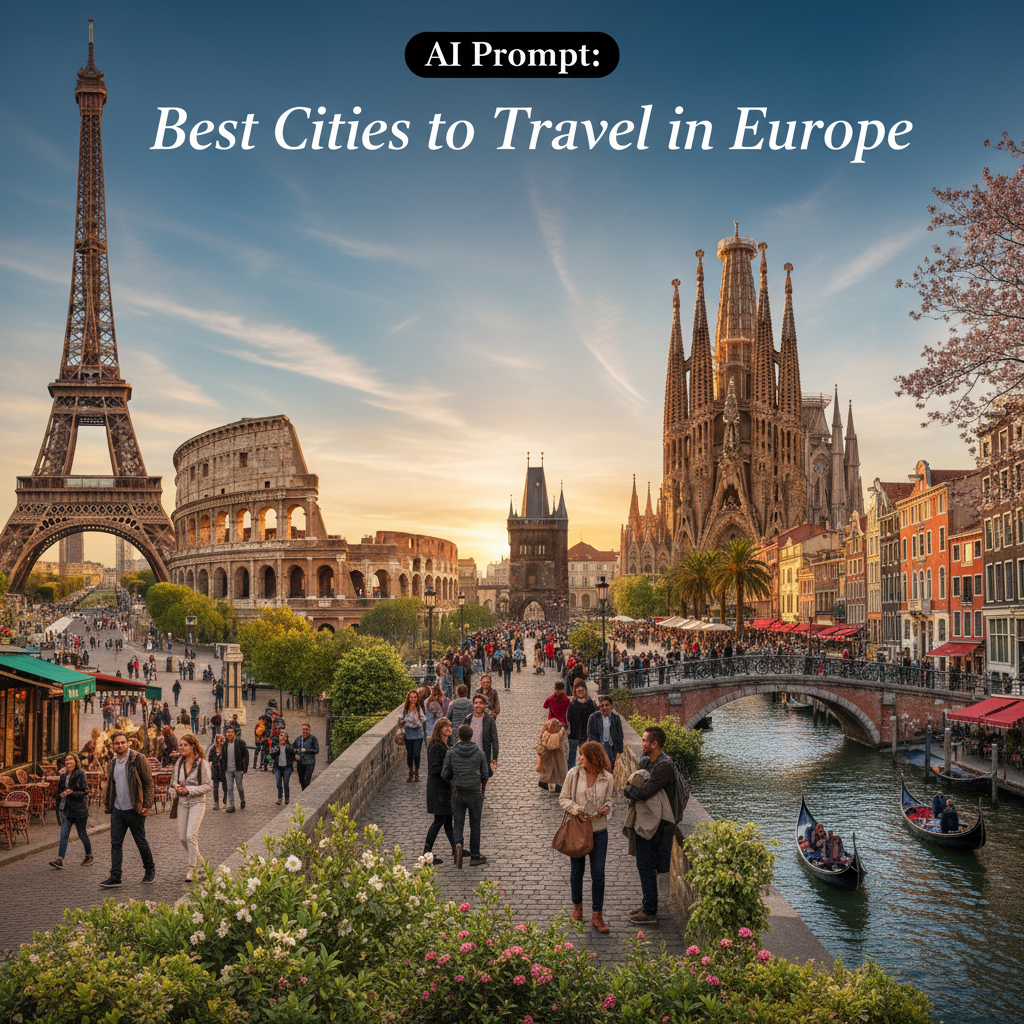
Quick View – Europe’s Top 5 Must-Visit Cities in 2026
Why These Cities Stand Out This Year
Europe’s top destinations for 2026 unite cultural depth, sustainability, new events, and increasing interest in less-crowded alternatives. Rising demand for unique experiences and responsible travel is shaping expert picks.
- Rome, Italy – Historic sites, food, and improved crowd management.
- Paris, France – Iconic sights, enhanced sustainability, and post-Olympics vibrancy.
- Warsaw, Poland – Surging interest for authenticity, affordability, and festivals.
- Stockholm, Sweden – Leading green initiatives, culinary spotlight, and Nordic charm.
- Nice, France – Balanced beach-city blend with fewer crowds than traditional hotspots.
At a Glance: Snapshot of Each City
| City | Standout Features for 2026 | Estimated Daily Cost (€) | Overtourism Rating | 2025-26 Tourism Growth |
|---|---|---|---|---|
| Rome | World Heritage sites, timed museum entry, improved public transit | 150-250 | Moderate (managed by time slots) | +8% |
| Paris | Post-Olympics upgrades, art, cycling lanes | 200-300 | High (avoid peak times/neighborhoods) | Stable |
| Warsaw | Cultural core, affordability, local festivals | 80-150 | Low | +20% |
| Stockholm | Green city, culinary events, museums, island tours | 150-250 | Low | +10% |
| Nice | Beach-city life, access to Monaco/Cannes | 140-230 | Low | +15% |
How We Selected the Best European Cities for Travel in 2026
Selection Criteria: Culture, Events, Sustainability & Trends
- Cultural depth: UNESCO sites, festivals, art hubs, and authentic local experiences.
- Major 2026 events: Music, art, and city-specific happenings.
- Sustainability: Green transport, eco-accommodation, and environmental policies.
- Trends: Rising visitation data, emerging gems, and expert recommendations for new experiences.
Sources and Expert Insights
- Aggregated 2025-2026 data and trends from sources including VacationOtrips, TravelPulse, Rick Steves’ Travel Blog, Lonely Planet, and industry reports.
- Tourism growth rates based on official city tourism boards and Eurostat figures.
- Sustainability rankings from the European Green Capital Index.
What’s New in 2026 – Capitals of Culture, Events & Unique Experiences
- Post-Olympics urban regeneration in Paris.
- Completion phases of Sagrada Família in Barcelona.
- Festival expansions in Edinburgh and Warsaw.
- Rising Baltic and Eastern city spotlights (Riga, Krakow, Gdansk) responding to overtourism elsewhere.
Full List: Best Cities to Travel in Europe (With 2026 Insights)
Western Europe Highlights (Paris, Barcelona, Rome…)
- Rome: Colosseum, Vatican Museums, Trastevere neighborhood. Best in shoulder season for 20% lower costs and crowds. Book city tours here.
- Paris: Eiffel Tower, Louvre, riverside cycling. Explore Le Marais for fewer tourists. Plan your Paris itinerary.
- Barcelona: Sagrada Família (completion stages), beaches, Gothic Quarter. Best in spring/fall. Overtourism risk—use advance booking.
- Amsterdam: Canals, Van Gogh Museum, eco-initiatives. Visit Noord via free ferries. Daily cost €100–150.
- Nice: Promenade des Anglais, ferries to Monaco. Less crowded, high sustainability.
Central & Eastern Europe Gems (Budapest, Ljubljana, Krakow…)
- Warsaw: Baroque Old Town, local festivals. Affordable, rising 20% in tourism, low overtourism.
- Budapest: Thermal baths, ruin bars, Danube cruises. Costs 10–20% lower than Western Europe.
- Krakow: Medieval squares, unique museums, easy day trips to Auschwitz. Minimal crowds outside summer.
- Ljubljana: Outdoor cafes, dragon bridge, rising in eco-rankings.
- Riga: Art Nouveau district, Baltic coast access, 18% increase in visitors, often overlooked.
Northern Europe Wonders (Oulu, Copenhagen, Tallinn…)
- Stockholm: Museums, islands, eco-leadership. Excellent public transport—best for families.
- Edinburgh: Historic Old Town, Fringe Festival, Highlands escapes. Strong walkability.
- Dublin: Literary tours, pub culture, nearby coastal hikes. 12% more visits in 2025.
- Copenhagen: Tivoli Gardens, bikes everywhere; outstanding for green travelers.
- Oulu: Nordic outdoors, smart city projects, and northern lights visibility.
- Tallinn: Medieval core, digital innovation, affordable Baltic cuisine.
Mediterranean Escapes and Hidden Gems (Valencia, Porto, Amalfi…)
- Lisbon: Belém Tower, historic trams, vibrant neighborhoods. Visit in April–June for festivals.
- Gdansk: Baltic port city, Sopot beaches, surging popularity, very affordable.
- Valencia: Turia Park, City of Arts and Sciences, authentic paella.
- Porto: Historic riversides, port wine cellars, fewer crowds than Lisbon.
- Amalfi: Coastal hikes, lemon groves, quieter than Positano when visiting after October.
Choosing the Right City for Your Travel Style
Best for First-Time Europe Travelers
- Paris – Iconic sights with efficient public transit.
- Rome – Rich history and easy regional connections.
- Amsterdam – English-friendly, cycle everywhere.
Best for Food Lovers & Culinary Explorers
- Barcelona – Tapas and markets.
- Lisbon – Seafood and wine festivals.
- Bologna – Authentic Italian cuisine.
Best for Budget Travelers
- Krakow – Mid-range lodging under €100/day.
- Budapest – Low-cost attractions, cheap eats.
- Riga – Affordable, hidden gem status.
Best for Sustainable & Green Tourism
- Stockholm – Top EU green city.
- Copenhagen – Extensive bike networks and eco-hotels.
- Ljubljana – Pedestrian old town, urban gardens.
Best for Nightlife & Entertainment
- Berlin – Clubs, live music, late-night galleries.
- Barcelona – Tapas bars, beach nightlife.
- Budapest – Ruin bar scene.
Essential 2026 Travel Logistics for European City Hopping
Transportation & Getting Around Europe Efficiently
- Use Eurail/Interrail passes for unlimited train journeys in 33 countries—efficient and cost-saving on routes like Paris–Amsterdam (3 hours) and Prague–Vienna (4 hours).
- Low-cost airlines connect less-connected hubs (e.g., Riga–Vilnius in 1 hour).
- Avoid driving in cities; favor dense, walkable centers and public transport.
- Book tickets in advance for summer/high season and major events.
Visa, Safety, and Entry Tips (Including Schengen Changes)
- No major Schengen changes; 90 days visa-free for most US/EU-adjacent travelers across 29 countries.
- ETIAS (European Travel Information and Authorization System) required from mid-2025: €7 online pre-clearance.
- UK/Ireland remain separate—plan accordingly if including London or Dublin.
Budgeting & Cost Breakdown by City
| City | Daily Budget (€) | Key Costs |
|---|---|---|
| Stockholm | 120–180 | Meals €20+, ferries free |
| Amsterdam | 100–150 | Trains €10–20, eats €15 |
| Prague | 70–110 | Castles, beer €3 |
| Riga | 60–90 | Free walking, cheap food |
| Warsaw | 80–150 | Trams €1–2, museum €5–15 |
| Palermo | <80 | Street food, budget hotels |
A typical 10-city journey averages €2,000–4,000 per person (excluding flights), while off-peak travel (October–May) can save 20–30%.
Navigating Crowds and Overtourism in Popular Destinations
- Visit icons like Venice or Santorini in off-peak months.
- Choose neighborhoods over tourist cores, e.g., Amsterdam Noord, Le Marais in Paris.
- Book major museums early and visit at opening.
- Explore lesser-known cities such as Innsbruck, Gdansk, and Vilnius for authentic experiences and reduced crowds.
- Prioritize cities with clear sustainability rankings and overtourism management measures.
FAQ: Planning Your European Trip in 2026
When Is the Best Time to Visit?
October–May delivers 20–30% savings, mild weather in most regions, and lower tourist density. Avoid main festivals if seeking quiet.
How Many Cities Can I Realistically See?
For two weeks, focus on 3–5 cities or regions; adding more risks travel fatigue. Efficient rail/air links make 6–8 cities feasible in 3–4 weeks.
How to Choose Where to Go?
Align cities with your interests: history (Rome, Athens), nature (Oulu, Innsbruck), nightlife (Berlin, Budapest), or affordability (Riga, Krakow). Use sustainability indexes and crowd data for extra guidance.
Which Cities Are Best Avoided for Overtourism in 2026?
- Santorini, Venice, and Dubrovnik see heavy cruise visitors—choose shoulder months or alternative ports (Nafplio, Gdansk).
- Central areas of Paris and Barcelona at peak season—explore nearby towns instead.
Ready to Explore? Planning Itineraries & Next Steps
- Compare multi-city transport passes: Eurail, Interrail.
- Check ETIAS for entry compliance starting 2026.
- Book accommodation in emerging cities and shoulder seasons for value deals.
- Sample itineraries: Western icons circuit, Baltic-Nordic adventure, or hidden Mediterranean gems.
For expert help, curated itineraries, and bookings, visit trusted travel operators or official tourism portals. Europe in 2026 offers an unrivaled mix of heritage, innovation, and responsible discovery. Start planning now to secure top rates and exclusive experiences.